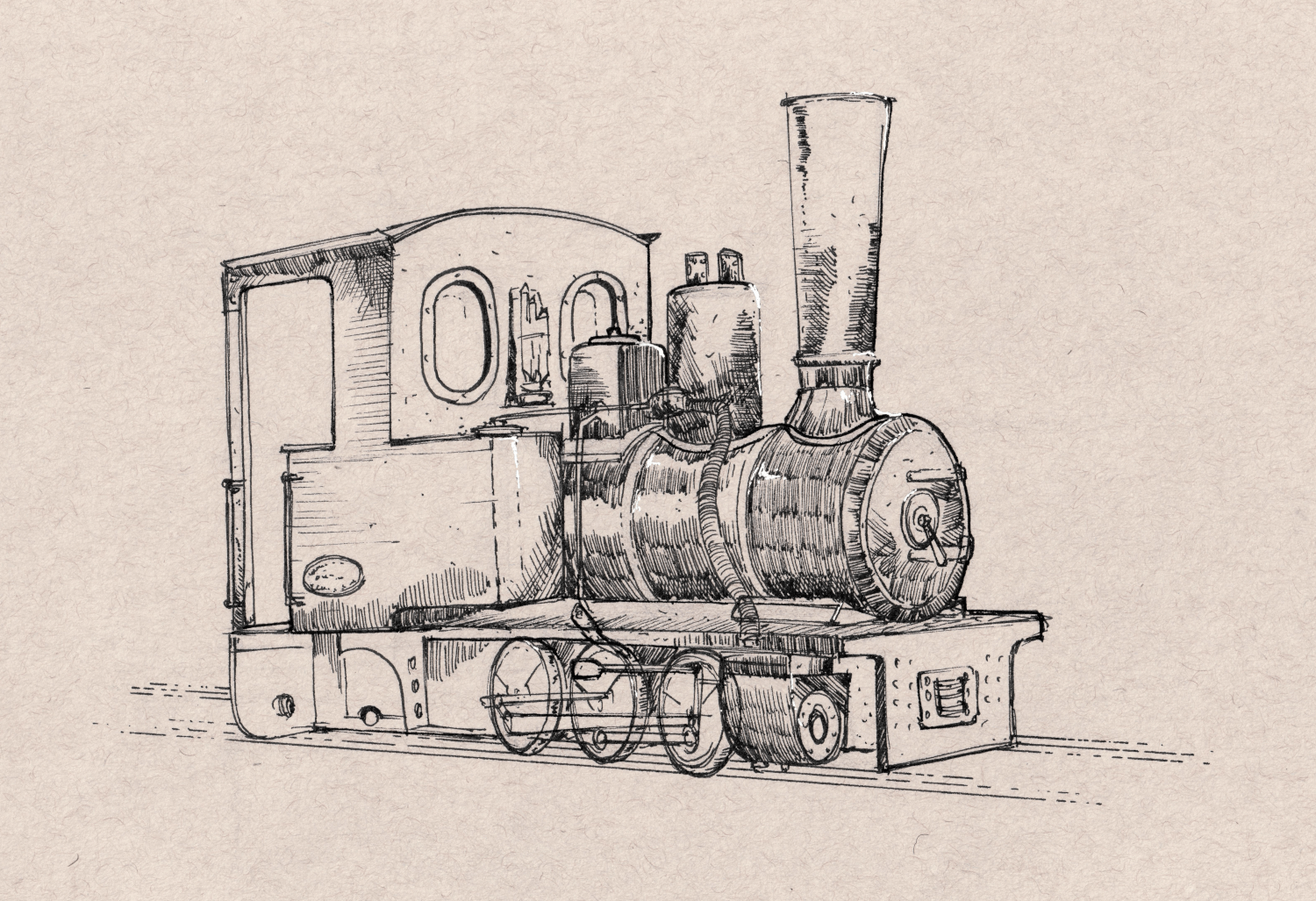
These few pages are all about my Feldbahn 0‑6‑0 from Station Road Steam
and the ’little’ side projects associated with it. The creation of this website was highly inspired by
reading Gentoo’s Journals from time to time. The field reports and little stories,
written by Colin, the author of Gentoo’s Journals, helped me to figure out some difficulties or even prevented mishaps
from happening in the first place. So if you haven’t been there already, I’d like to encourage you to at least take a
glimpse.
The first letters contributing to the Feldbahn Journal were typed on 10th May 2022, in expectation to steadily build up
a compendium of helpful and perhaps even entertaining articles over time.
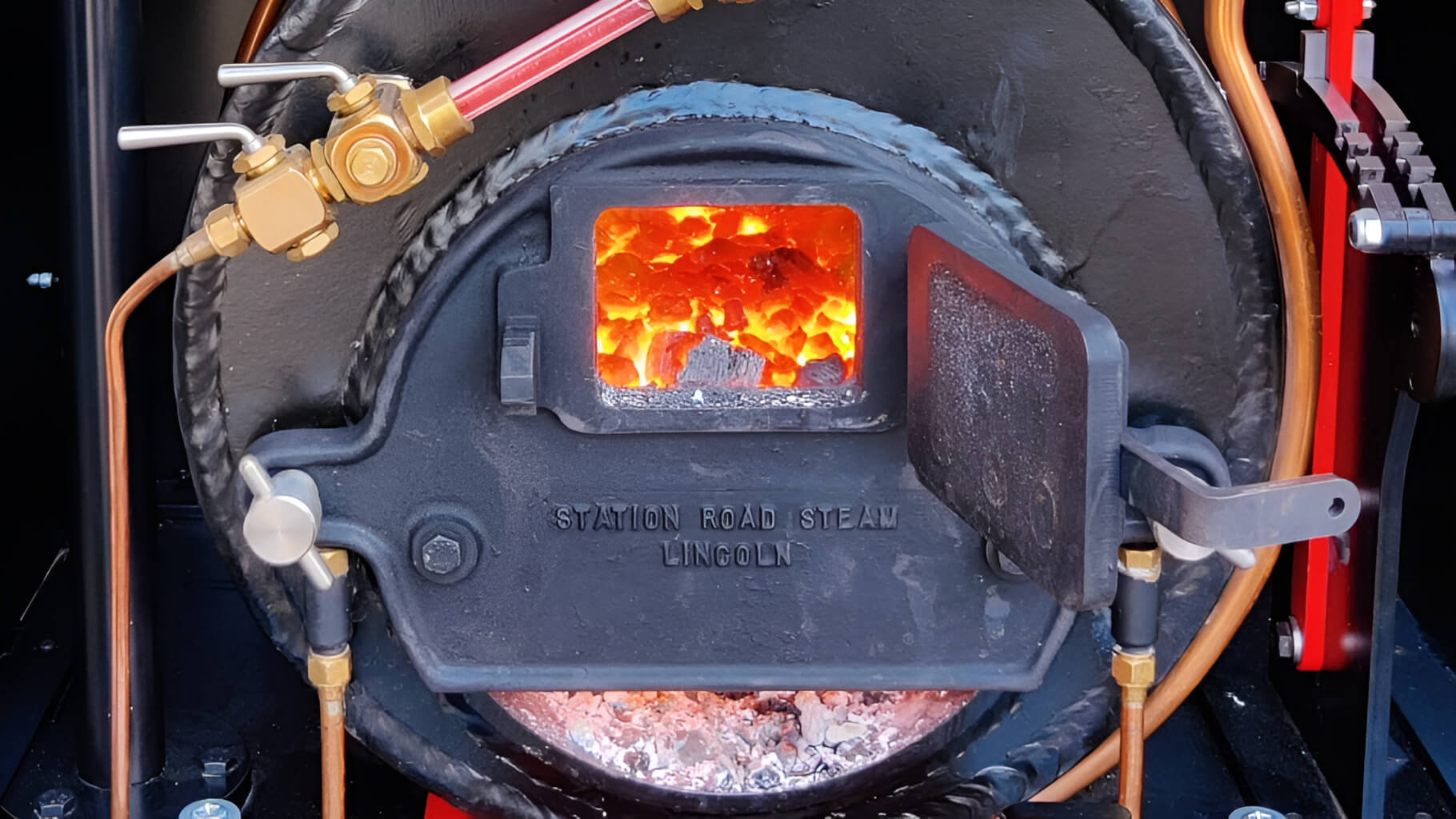
If you come with a standard loco boiler background, you might need to forget the “art of firing” and start over from scratch.
The Coal The recommended coal to burn is anthracite. This is mostly in your own interest. You will ride all day long in the fumes, and anthracite is the “cleanest” coal (aiming for 100% carbon), thus combusting almost to 100% breathable/nontoxic CO₂. Of course this depends on the coal’s quality itself, but you get an idea....
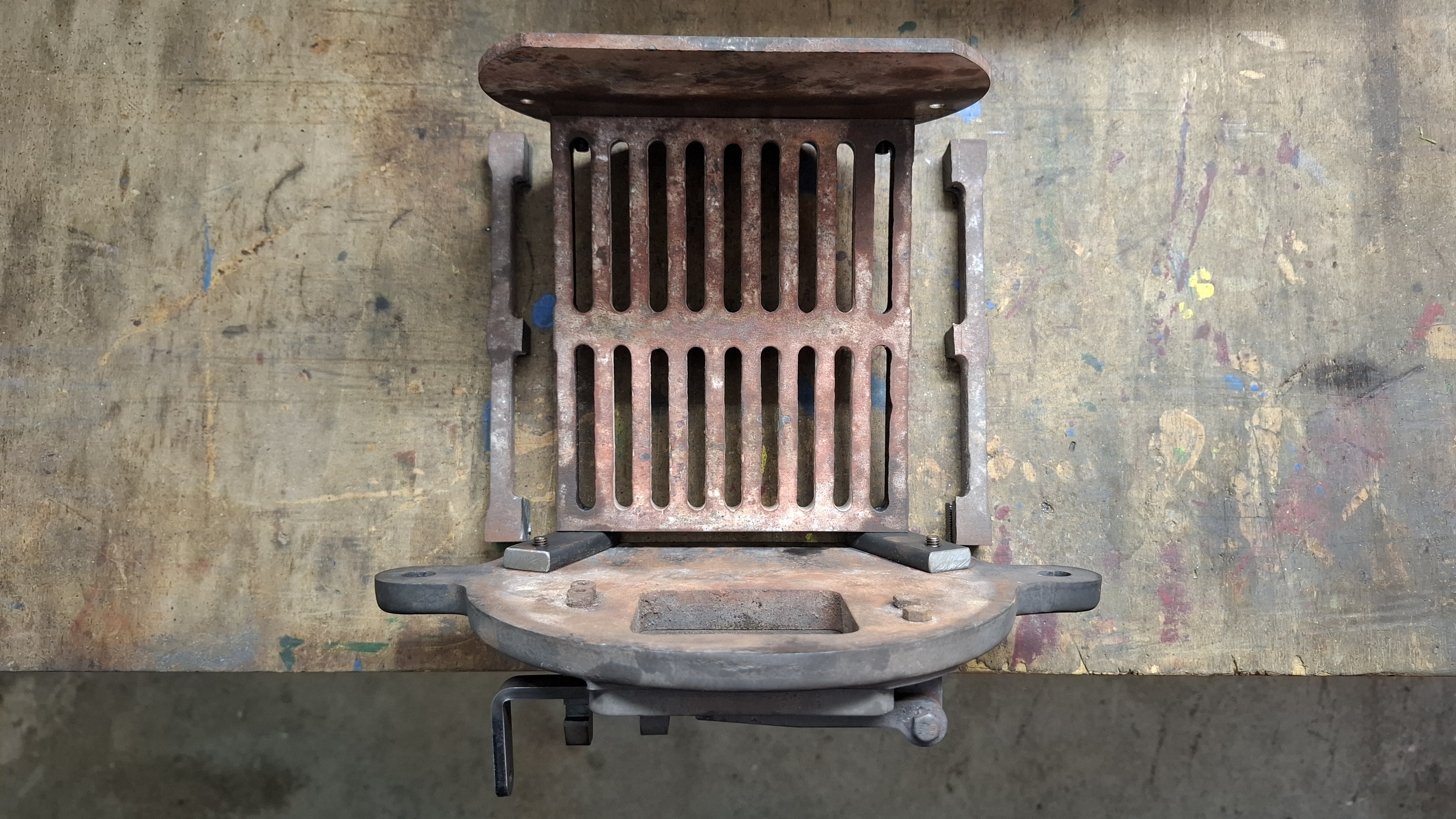
With the SRS marine-type boiler, the engineer is left with a shallow firebed. About two flat layers of coal fit between the grate and the firebox opening – and that is as high as it gets without the risk of coal tumbling back out. Little headroom once demand picks up, and little tolerance for slag or cold spots – with no practical way to inspect the fire on the move before it is too late to recover....
A day in steam often calls for a cup of tea, a chat, or just a brief pause.
However, with the standard-fitted SRS marine-type boiler, taking a break can be tricky — often ending either in a cold firebox or prematurely with the safety valves lifting. The challenge stems from the shallow firebed and the high burning temperature of coal (e.g., anthracite burns at roughly 900–1200 °C), which, under these conditions, requires a steady oxygen supply (via exhaust draught or blower) to stay alight....
A howling or humming sound like a low, sustained “houuuuugh” – can be louder than the steam whistle.
This usually indicates a hole in the fire, where cold air is drawn through the grate, causing the boiler tubes to vibrate – absolutely undesirable, especially for rolled-in tubes!
However, this is not always the case. Especially not with the SRS marine-type boiler. Even when the firebed is laid perfectly, the boiler tends to howl under load due to a shallow firebed – a consequence of the grate’s relatively high position – which doesn’t give the air enough time to heat fully....
A day in steam may call for a cup of tea, a chat, or just a brief pause.
However, with the standard-fitted SRS marine-type boiler, taking a break can be tricky – often ending either in a stone-cold fire or prematurely with the safety valves lifting. The challenge stems from the shallow firebed and the high burning temperature of coal (e.g., anthracite burns at roughly 900 - 1200 °C), which, under these conditions, requires a steady oxygen supply (via exhaust draught or blower) to stay alight....