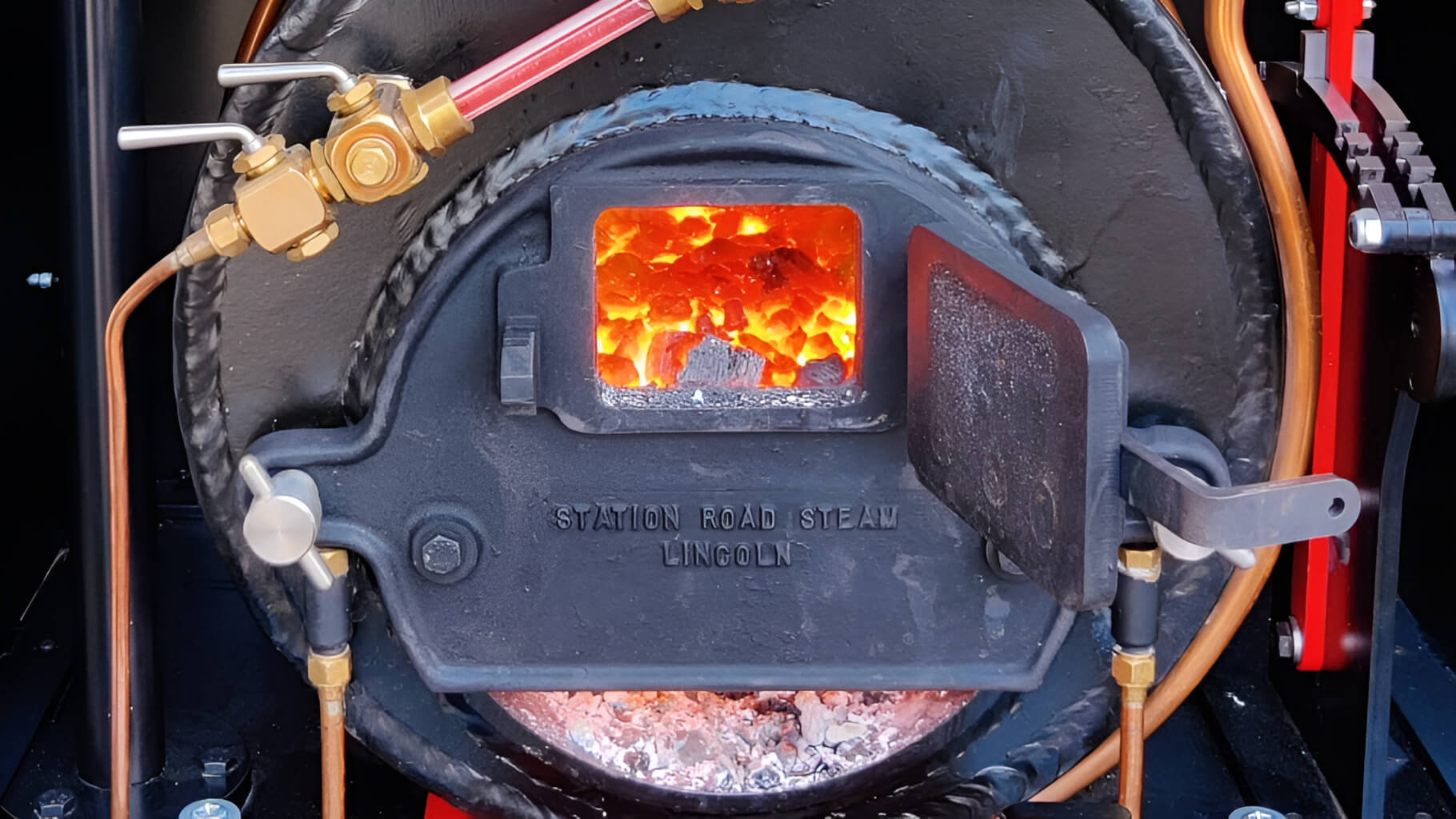
If you come with a standard loco boiler background, you might need to forget the “art of firing” and start over from scratch.
The Coal
The recommended coal to burn is anthracite. This is mostly in your own interest. You will ride all day long in the fumes, and anthracite is the “cleanest” coal (aiming for 100% carbon), thus combusting almost to 100% breathable/nontoxic CO₂. Of course this depends on the coal’s quality itself, but you get an idea. Btw. Sulphur content, in this context, should be near nothing.
Size-wise “Nut 3” (Walnut-size, 20–40 mm pieces) will stay long enough on the grate to burn to smaller pieces, while not being too clumpy, allowing for a firebed of 2 to 2.5 layers of coal (flat, under the firebox opening).
Starting the Fire
To start the fire, I use charcoal, topped with some soaked in lamp oil or plain fire starters. One firebox flat full — then, over time, adding anthracite (no more charcoal). It’s a good idea to make sure all charcoal is replaced/burnt by the time the loco is put into service. First, charcoal is lighter, thus subject to be lifted easier, and second, it burns faster, eventually leaving you with dead spots in the firebed.
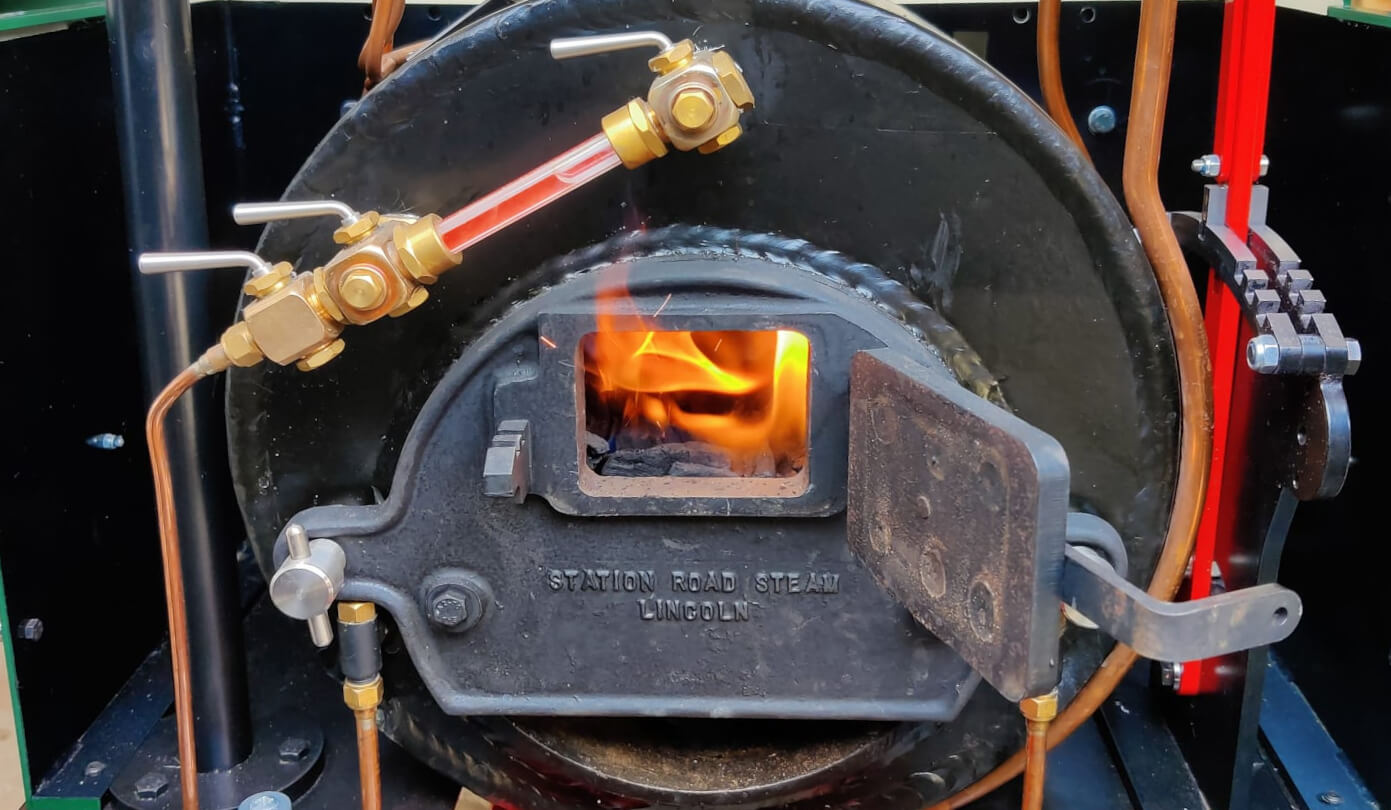
One note on the soaked charcoal. If it is soaked overnight, it is then kind of dry, while carrying the same amount of lamp oil (if not more, than if it was freshly wet). So it becomes not a drippy hot mess.
BTW: Lamp oil is never to be confused with gasoline in this application—the other will make a noticeable puff!
Building Up the Firebed
There is not much space between grate and firebox opening — so compared with a standard loco boiler, the firebed will be more like a relatively shallow “fire pile” than a really solid firebed. You can expect approximately two layers of coal that fit into the firebox without piling.
While this might be enough to run without much load or on flat terrain, I’d recommend building up the bed a bit more for heavier applications (and mitigate the risk of dead spots). If you’d rather fix the shallow firebed properly, instead of just working around it, that’s exactly what lowering the grate is for.
One more quirk that comes with the price-friendly marine boiler: the ash in the ashtray builds up relatively quickly, eventually blocking airflow, if not cleaned-out regularly.
Set Up an Idling Fire
If you intend to have a longer pause, you might be interested in reading how to set up an idling fire .
BTW, with a lowered grate, this is might be still necessary for a longer pause, because the volume of the fire is still relatively small to sustain itself. So the heat drop without a draught is still significant.