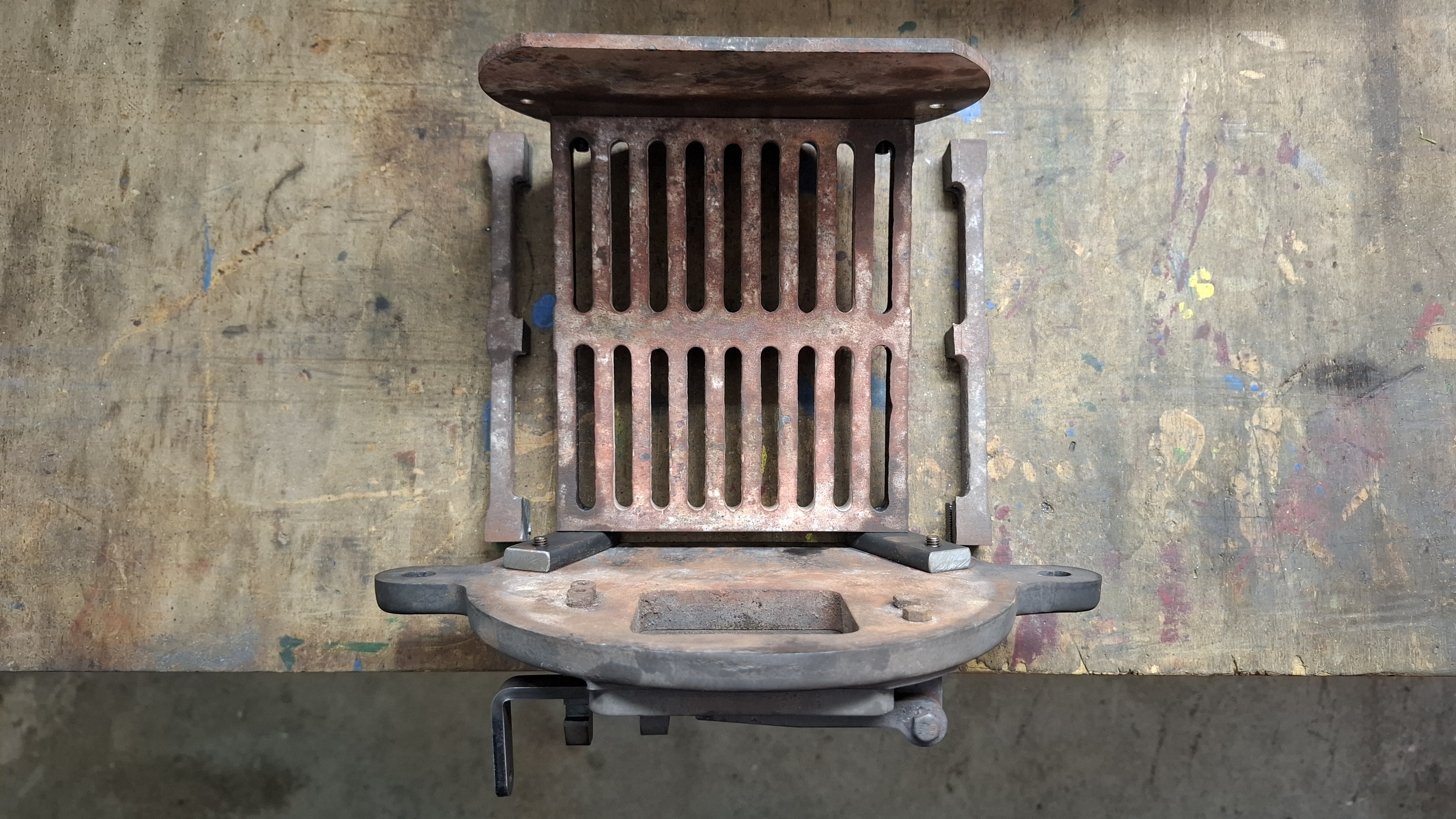
With the SRS marine-type boiler, the engineer is left with a shallow firebed. About two flat layers of coal fit between the grate and the firebox opening – and that is as high as it gets without the risk of coal tumbling back out. Little headroom once demand picks up, and little tolerance for slag or cold spots – with no practical way to inspect the fire on the move before it is too late to recover.
While there is little that could be improved regarding the way to inspect the fire, the firebed depth could be, with a bit of effort. But, before expectations are sent the wrong way: this is not to achieve a better boiler performance. It makes firing the loco less finicky and over all a bit more stable. More on this in Firing the Loco .
Trivia
Most likely the shallow firebed is a direct consequence of scaling down a full-size design, or at least the inspiration from it. Presumably with the goal in mind to maximize grate area (– one of the measurements that matter when specifying the dimensions of the whole system). While the original has still enough room for a deep-enough firebed, the physics do not scale down, and one is left with a fire that feels like it is constantly fighting the engineer.
The Modification
So, basically, this is a pretty straight forward modification that can be done to the supplied firebox assembly. The grate loses two ribs. They are cut with an angle grinder or hacksaw. It then needs four new threaded mounting holes, because the four existing once get cut off. Also, two hangers need to be fabricated, and two new holes are needed in the baffle plate of the firebox as new mounting points. The hangers allow the cast backhead to be unmodified, and there is enough room in the back to fit the two hangers that each have 6 mm thickness. I left about 5 mm of room between the opening of the ashtray and the grate.
Other than for the other projects, it makes little sense to provide exact measurements here, because the grate is cast and there is never one like the other. So basically, I winged the whole modification, which also contributes to this. But you should already have a good idea of what needs to be done, by now.
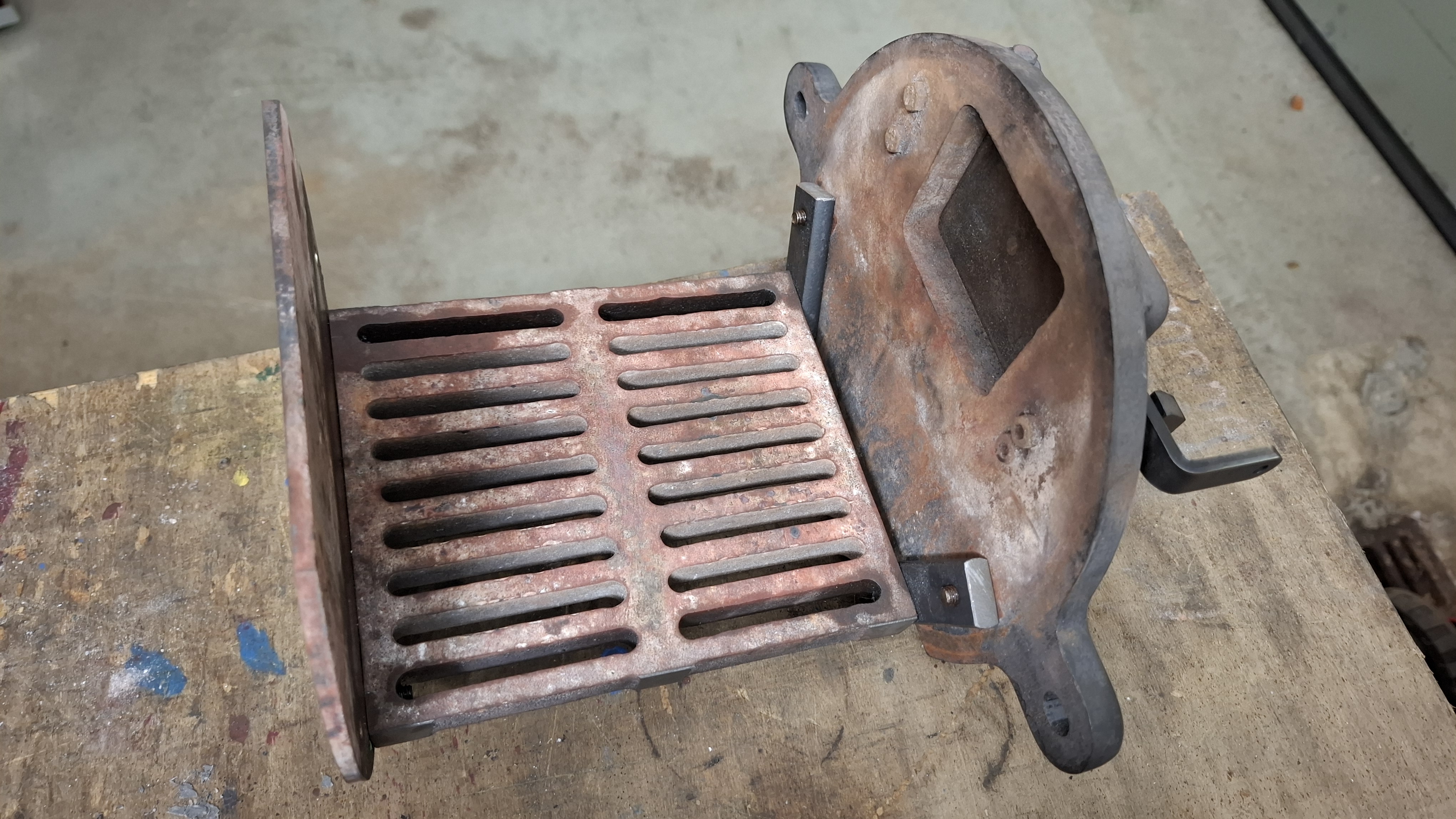
Observation after Modification
It becomes easier to fire the loco, and operational stops are no longer as problematic as before. But I would recommend steering the firebed kind of regularly, e.g., when loading passengers (or at “longer” stops in general) – cold spots are still a thing and, unsurprisingly, highly problematic under load.
Also, the idling fire technique still helps for longer breaks.